
close
Choose Your Site
Global
Social Media

Views: 1815 Author: Site Editor Publish Time: 2026-02-27 Origin: Site


Walk into the garage, basement or utility room of an American home, and besides the water heater and washing machine, you will always see a water softener. It is not as conspicuous as a refrigerator or a TV, yet it permeates every aspect of Americans' daily lives, from morning washing and grooming to late-night laundry. The survey data from the Water Quality Association in 2021 is straightforward: one quarter of American households have installed a water softener, nearly double the 13% in 2017, and 72% of people will rush to install this machine within a year of buying or renting a house. In North America, a water softener has never been a luxury product, but a necessity for every household to combat hard water.
While we are still debating whether it is necessary to install a water softener, Americans have already given the answer through decades of life experience: 85% of areas in North America are hard water regions. This water, which seems unproblematic, quietly increases household expenses and damages various home appliances. Moreover, in the face of the nationwide hard water problem, American municipal water treatment plants do not perform softening treatment on hard water, which also makes the independent installation of water softeners by households the only way to solve the hard water problem.
North America's hard water problem is inherently caused by geographical conditions. A look at the water quality map from the U.S. Water Resources Task Force makes it clear that from the Great Lakes to Texas, and from Florida to California, the calcium and magnesium ion content in the water exceeds the standard in 85% of the regions. The Midwest and some other areas are even severe hard water regions, where the calcium and magnesium ion content is more than three times the soft water standard. These calcium and magnesium minerals are not man-made pollutants; instead, when rainwater seeps underground, it dissolves minerals in rock formations such as limestone and chalk, and flows into the municipal water supply system along with groundwater, ultimately entering every household—this is an inherent "geographical attribute" engraved in North American land.

It is puzzling that the United States, which has always been known for its stringent drinking water standards, and whose Safe Drinking Water Act is even hailed as one of the strictest water quality regulations in the world—even water pipes and faucets are required to pass the NSF sanitary certification—would turn a blind eye to the hard water problem and leave hard water unsoftened throughout the treatment process at water plants. Behind this lies the water treatment plants' considerations regarding laws, regulations as well as economic costs.
First of all, there are no mandatory restrictions on water hardness in U.S. drinking water standards. Unlike China, the European Union, Japan and other countries and regions that have set clear numerical standards for the total hardness of drinking water, the drinking water safety standards formulated by the U.S. Environmental Protection Agency only impose strict limits on harmful pollutants such as lead, mercury and E. coli, but do not include calcium and magnesium ions in the mandatory control indicators. The American Water Works Association only provides a reference value of 80-100ppm, which is not a statutory standard. At the regulatory level, as long as the harmful pollutants in the water meet the standards, even if the calcium and magnesium ion concentration is extremely high, it is still qualified drinking water, and water plants have no legal liability to soften hard water.
Secondly, hard water itself is not harmful; on the contrary, it is regarded as healthy water containing beneficial minerals. Calcium and magnesium are both essential minerals for the human body, which can supplement calcium for the human body and maintain bone health. Even in the U.S. drinking water field, it is believed that hard water containing an appropriate amount of calcium and magnesium ions has a sweeter and mellow taste, and is far more suitable for drinking than distilled water without minerals. The problems caused by hard water, such as limescale, dry skin and so on, are all classified as "life experience issues" rather than "drinking water safety issues". The core responsibility of municipal water treatment plants is to ensure the safety of drinking water, not to improve the experience of domestic water use. In terms of priority, water softening is naturally not on the treatment list of water plants.
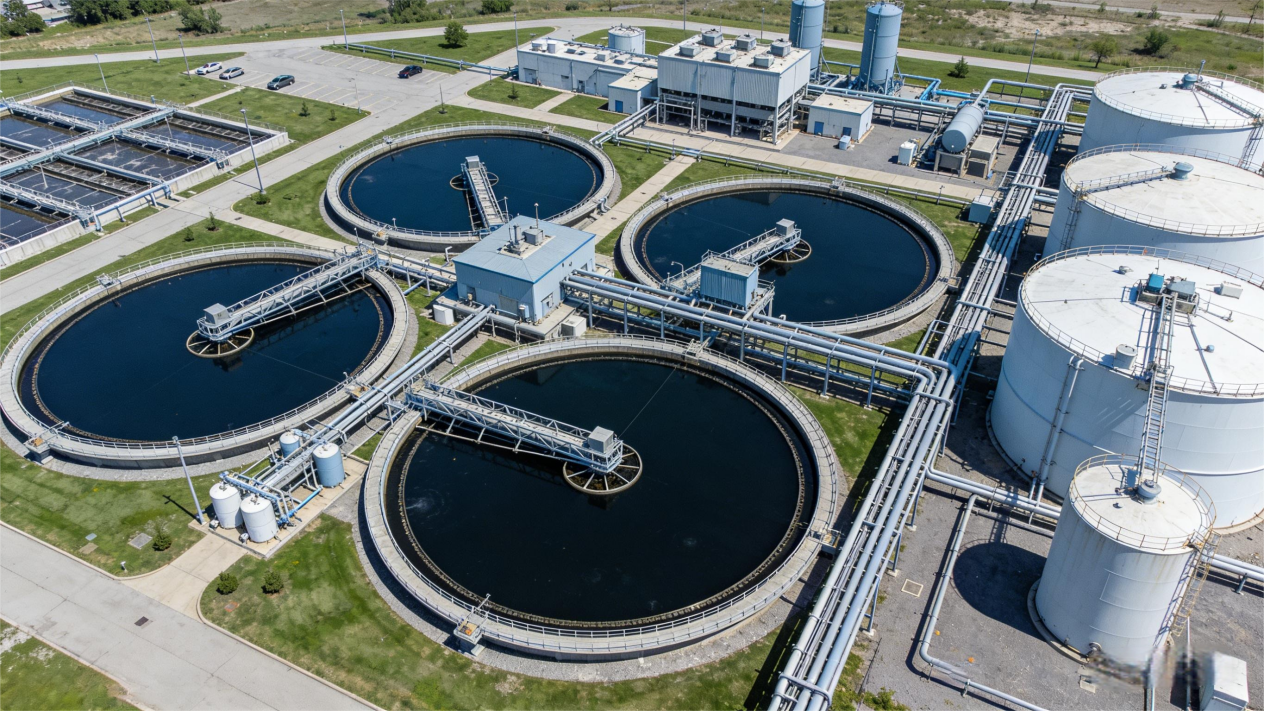
Furthermore, nationwide hard water softening treatment will bring unbearable economic costs and technical adaptation challenges. Hard water regions in North America are widely distributed, and the degree of hard water varies greatly in different areas. The calcium and magnesium ion concentration in the severe hard water regions of the Midwest is several times that in the mild hard water regions of the East. If large-scale softening is to be achieved at the water plant end, the resin exchange method used at the household end cannot be adopted at all. Instead, different industrial-grade softening processes need to be adapted according to water quality differences, such as induced crystallization softening technology for ultra-high hardness water sources and chemical softening method for regular hardness water. The equipment systems and consumable configurations of different processes are completely different. Customizing exclusive softening equipment for water plants across the U.S. alone would cost an astronomical figure of hundreds of billions of dollars, which municipal finances simply cannot afford.
Finally, the U.S. municipal water supply system follows the principle of "treatment on demand", and leaves the personalized needs of domestic water use to households. In the American water supply concept, municipal water plants are only responsible for delivering "safe water" to the doorstep, while residents independently choose treatment methods for their personalized needs such as water taste, hardness and purification level. Just as some people install water purifiers for direct drinking water and some buy bottled water for mineral water, the life troubles caused by hard water are also classified as the scope of household independent solutions, which also creates a huge market space for the popularization of household water treatment equipment such as water softeners.
For this reason, American water treatment plants only conduct basic treatments such as filtration, disinfection and heavy metal removal on water sources to ensure the safety of drinking water, but do not perform any softening treatment on hard water. Hard water thus flows out of water plants and into every household, bringing a series of tangible troubles in life and wearing away all the exquisiteness of life.
Turn on the shower head in the morning, and the water flow is as thin as silk, with the water outlet holes already blocked by white limescale; after taking a shower, the skin is tight and dry, and no amount of body lotion helps; the hair becomes dry and split ends, with more and more hair loss, and even the most expensive hair and skin care products fail to deliver their full effects; the dishes washed by the dishwasher are always covered with a hazy white film, the glass cups lose their bright luster, feel rough to the touch, and cannot be cleaned even after repeated wiping.
In the unseen places, the destructive power of hard water is even more frustrating. Thick limescale accumulates in the inner tank of water heaters, greatly reducing heating efficiency—water that originally took half an hour to heat now takes an hour, and the electricity bill creeps up unconsciously; limescale in the washing machine drum sticks to the fabric fibers, making white clothes turn yellow slowly, colored clothes fade and become old, clothes become hard and brittle, pill after a few wears, and their service life is directly halved; the water pipes, faucets and bathroom hardware at home will form yellow scale before long, the chrome-plated surface loses its luster and even has corroded spots, making even high-end bathroom fixtures look cheap and old in an instant.
What annoys Americans most is that hard water is also quietly wasting the family's money. Because limescale affects the cleaning effect, you have to squeeze more dish soap for washing dishes, add more laundry detergent for doing laundry, and use more body wash for taking a shower—these daily consumables are used half as much again for no reason; home appliances that come into contact with water, such as water heaters, dishwashers and water purifiers, have their service life shortened by 30% to 50% when used in hard water. A $2,000 water heater can only be used for 6 years in a hard water region, but more than 10 years in a soft water region—the cost of replacing equipment alone can differ by thousands of dollars; repairs such as pipe blockages and faucet leaks come one after another, and it is common for families in hard water regions to spend hundreds of dollars more on water and electricity maintenance every year than those in soft water regions.
Although the calcium and magnesium ions in hard water do not directly harm the human body, the chain reactions they trigger actually affect the living state of the whole family: the soap scum formed by the reaction of hard water with body wash and shampoo will cling tightly to the skin and hair, clogging pores and hair follicles. Dry and itchy skin, redness and sensitivity are common occurrences, and the elderly, children and people with sensitive skin are the most affected; children's skin is delicate, and prolonged contact with hard water is prone to eczema and dermatitis, and these skin problems will improve significantly after switching to softened water for bathing.
For beauty-conscious Americans, soft water is a natural "skin care product". Softened water contains no calcium and magnesium ions and will not form soap scum. When taking a shower, the water flow can easily wash away dirt, leaving the skin moisturized after washing, and it can remain soft without applying too much body lotion; washing hair with softened water makes the hair smooth and fluffy, with less hair loss and split ends, and even ordinary hair and skin care products can achieve the effect of high-end salons. Data shows that American women are loyal advocates of water softeners, and more than 60% of women say that their skin and hair condition have improved a lot after installing a water softener, and they also save a lot on hair and skin care products.

In addition, the limescale formed after heating hard water is easy to become a "breeding ground" for bacteria. The crevices of limescale in water heaters, humidifiers and kettles are easy to hide harmful bacteria such as E. coli and mold, which enter life along with the water flow and affect the hygiene of water use. Water softeners can fundamentally avoid the formation of limescale, keep all water-related appliances at home clean, and protect the family's water safety from the source—which is more important than anything for families with the elderly and children.
American home consumption has always valued "long-term value". Rather than spending money at one time, people care more about the subsequent use cost and the value preservation of things. A water softener is exactly a high-cost-performance investment that makes the family "save money and worry", and its benefits will be reflected little by little in daily use.
First of all, a water softener can greatly extend the service life of various home appliances. Water heaters, dishwashers, washing machines, water purifiers, bathroom hardware—all things that come into contact with water can get rid of the trouble of limescale in a soft water environment, and will no longer accelerate aging due to the accumulation of calcium and magnesium ions. The average service life of water heaters in hard water regions is only 6-8 years, but 10-12 years in soft water regions; the inner drum of a washing machine will accumulate limescale in 3 years in hard water, but can keep clean all the time with soft water, doubling the service life directly. The savings on equipment replacement alone can amount to thousands of dollars for the family.
Secondly, a water softener can effectively reduce daily expenses and energy costs. Washing clothes with softened water can reduce the use of detergent by 50%, because there is no need to react with calcium and magnesium ions anymore, and the cleaning ingredients can give full play to their effects, making the washed clothes cleaner and softer; water heaters do not need to consume extra energy to penetrate limescale, saving 15%-20% on electricity bills—an ordinary three-person family can save hundreds of dollars on electricity bills every year alone; softened water can also reduce pipe blockage and corrosion, so the family will no longer frequently have problems such as faucet leakage and pipe blockage. Even washing a car with softened water can reduce the corrosion of limescale on the car paint, keep the car body clean and bright, and save the cost of frequent waxing.
For a product to become a national standard, demand alone is not enough; it also needs the support of a mature industrial system. After nearly a century of development, the U.S. water softener industry has formed a complete industrial chain from R&D, production to sales, installation and after-sales service. The technology is increasingly in line with household needs, and the service is more and more perfect, making Americans feel at ease when installing water softeners and worry-free when using them. This is also the key to the popularization of water softeners.
In 1925, the world's first household water softener was born in the United States, opening a new era of household water treatment. For nearly a century, the technological iteration of water softeners has never stopped, with only one core goal: to make the products smarter, more energy-saving and more suitable for the daily use of families, so that ordinary people can easily enjoy soft water without learning complicated operations.
Today's mainstream water softeners in the United States have long got rid of the cumbersomeness of early "manual regeneration and frequent salt adding" and realized fully automated operation.
For example, UMEK's water softeners are equipped with automatic on-demand regeneration technology, which can accurately monitor the family's water consumption through a flow meter. When the softening capacity of the resin is insufficient, it will automatically start the regeneration process without manual supervision. It not only ensures the softening effect, but also saves salt and water, saving more than 30% energy and water compared with traditional manual products.

More thoughtfully, the technological upgrading of core components has solved the worries of many families. Mainstream American brands have abandoned traditional plastic and rubber valves and adopted high-quality ceramic valves with patented technology. These valves will not age or produce microplastics, and have excellent sealing performance, fundamentally solving the problems of valve leakage and wear. Moreover, most ceramic components provide a lifetime warranty, so there is no need to worry about catastrophic damage at all. The automatic bypass function has also become a standard configuration—during the regeneration process, it will automatically switch to raw water output, so there will be no water cut-off at home, and people will no longer experience the embarrassment of wanting to take a shower but having no water; the power failure protection function can automatically save the operating parameters, and there is no need to reset after the power is restored, which even the elderly can use easily.
The integration of intelligent technology has even made water softeners a part of "smart homes". Mainstream products are equipped with high-definition LCD displays, which can show water consumption, regeneration status and soft water hardness in real time, making the family's water use clear at a glance; some high-end products also support remote control via mobile APP, allowing users to adjust equipment parameters when going out, and can receive "salt adding reminders" and "regeneration completion notifications", truly realizing "no need to worry, just enjoy". Technological progress has transformed water softeners from a "professional water treatment equipment" into a home appliance that everyone can use, greatly reducing the threshold of use.
In addition to thoughtful technology, America's perfect service system also makes the process of household water softener installation extremely smooth. A water softener is equipment that requires professional installation, and the standard of installation directly affects the use effect. The United States has long formed an "online + offline" integrated and "one-stop full-process service" system. From the initial water quality testing to the later after-sales warranty, professional personnel follow up the whole process without the need for their own trouble.
There are a lot of choices when buying a water softener: large offline home improvement supermarkets such as Home Depot and Lowe's all have special water softener sections, with professional shopping guides explaining on the spot, and can also provide free on-site water quality testing, and customize exclusive softening solutions according to the family's house type, number of water users and degree of hard water; online platforms such as Amazon and brand official websites have transparent prices and a rich selection of products. After placing an order, you can make an appointment for professional on-site installation with clearly marked installation costs and no hidden consumption.

Installers are all professionally trained and certified professionals who can install in accordance with the family's water supply layout. Even for old house renovation and special house types, they can flexibly adjust the plan without damaging the original decoration.
In terms of after-sales service, the warranty policies of many brands are even more reassuring. For example, UMEK's warranty policy includes a lifetime warranty on ceramic components, a 10-year warranty on resin tanks, a 5-year warranty on valve heads, and a 1-year warranty on all other components; top brands such as Ecowater and Culligan also provide lifetime maintenance services for high-end products, regularly visiting to test equipment and replace accessories to keep the products in the best condition at all times.
More importantly, the United States has stringent certification standards for the quality of water softeners. As equipment that comes into direct contact with domestic water, mainstream American water softeners have all passed the NSF44 drinking water equipment safety certification to ensure that product materials will not release harmful substances into the water; the power supply part has passed the UL certification to ensure electrical safety; some products have also passed the WQA Water Quality Association certification to ensure that the softening effect meets the standard. These authoritative certifications make Americans buy and use with confidence.
The sustained and rapid growth of the U.S. water softener market, as well as the diversified product system, provide American families with a wealth of choices. From price ranges to functions, from single apartments to super large villas, from municipal tap water to well water, the U.S. water softener market can accurately match the needs of different families, allowing every family to find the one that suits them.
According to research data from Straits Research, the U.S. water softener market size reached 2.96 billion U.S. dollars in 2022, and is expected to grow to 5.44 billion U.S. dollars by 2031, with a compound annual growth rate of 7%, maintaining a stable and rapid growth. This growth trend stems from both the continuous improvement of household penetration rate and the increase in unit price brought by product upgrading. A new generation of intelligent, energy-saving and multi-functional water softeners is gradually becoming the mainstream of the market, driving the continuous development of the entire industry.
The rapid growth of the market has attracted many enterprises to enter the market, making the market players more diversified and bringing benign market competition. Traditional water treatment brands such as Ecowater, Culligan and Pentair occupy the mid-to-high-end market with nearly a century of technological accumulation and good brand reputation; comprehensive home appliance brands such as A.O. Smith and 3M have improved their own water treatment product matrix by acquiring water softener enterprises and developing their own products, and quickly seized the market by virtue of their strong channel advantages.

Competition among brands is no longer a simple price competition, but a comprehensive competition of technology, quality and service.
Whoever has more advanced technology, more practical products and more perfect services will win the favor of consumers. This benign competition not only makes the quality and service level of water softeners continue to improve, but also makes the product prices more reasonable, making them affordable for more ordinary families.
Today's U.S. water softener market has long formed a product system covering all price ranges and all scenarios from high, medium to low ends. Whether you are a young white-collar worker living alone, or a big family with three generations living together, whether you live in a small apartment or a super large villa, you can find a product that suits you.
From the perspective of price range, entry-level products are priced between 450 and 1500 US dollars, focusing on basic softening functions with a compact size, suitable for small households such as single apartments and DINK families, and can meet the basic needs of daily washing and laundry; mid-range products are priced between 1500 and 5000 US dollars with more comprehensive functions, equipped with automatic regeneration, intelligent display and other functions, and larger softening water volume, suitable for medium-sized households such as three or four-person families; high-end products are priced between 5000 and 8500 US dollars, supporting whole-house softening and personalized hardness adjustment, can be seamlessly integrated with the whole-house water purification system, and also provide exclusive customized installation and lifetime maintenance services, suitable for large households, villa owners and high-end consumer groups.
From the perspective of product functions, water softeners have long developed from a single softening function to personalized products that can adapt to different water sources. For municipal tap water, there are special water softeners that can remove residual chlorine and protect resin, avoiding residual chlorine from damaging the resin and extending the product service life; for well water, there are special water softeners that can remove iron and manganese ions, preventing resin poisoning and ensuring the softening effect is always online; there are also combined machines integrating soft water and purified water functions, which can not only solve the hard water problem, but also remove sediment, rust and peculiar smell in the water to achieve one-stop water treatment, especially suitable for families with high water quality requirements.
In addition, brands will also launch products with different treatment capacities ranging from 32000G to 64000G according to the number of water users and daily water consumption of the family, accurately matching the needs of different families and avoiding waste or insufficient softening effect. This refined product division allows every family to accurately find the most suitable soft water solution for themselves.
At the same time, Americans' water treatment demand is also shifting from a single scenario to whole-house water purification. A 2021 survey shows that consumers' interest in whole-house water treatment systems has increased from 30% to 37%, and their attention to water softeners has increased from 37% to 42%. Water softeners have become the most popular household water treatment product, accounting for 46%, far exceeding under-sink filters, whole-house water purifiers and other products. This trend indicates that Americans have long realized that water treatment is not a matter of "one faucet", but a matter of the whole family, and as the core component of whole-house water treatment, water softeners have naturally become a family standard.
After nearly a century of development, water softeners have not only become a necessity for American families, but also gradually integrated into American home culture, becoming a symbol of "quality of life" and "healthy family". This cultural integration has further promoted its popularization and made it an irreplaceable part of American home consumption.
In the U.S. real estate market, water softeners have long become a bonus item to measure the quality of houses, and even an important selling point for house sales and rentals. Many developers will directly install water softeners as standard home appliances in newly built residential buildings, and play the banner of whole-house soft water to improve the cost performance and attractiveness of the house, making the house more competitive in sales; in the second-hand housing transaction, houses equipped with water softeners can often be sold at a higher price and closed faster.
Homebuyers all know that a house with a water softener not only has a higher quality of life, but also the pipes and home appliances in the house have less wear and tear due to the long-term use of soft water, and the subsequent maintenance cost will be greatly reduced—it is a truly high-quality asset.

The U.S. rental market is highly competitive. To attract tenants and increase rent, landlords will try their best to improve the quality of life of the house, and installing a water softener is one of the choices. For houses with the same price and the same house type, as long as they are equipped with a water softener, they can often be rented out faster and the rent can be slightly higher than other houses. Because tenants all know that living in a house with a water softener can stay away from various troubles caused by hard water and enjoy a more comfortable life, which is extremely attractive to young tenants and family tenants who pay attention to the quality of life.
American home culture and life concepts are also constantly promoting the popularization of water softeners. Americans have always valued the quality of life and are willing to pay for products that improve daily experience, and the comfortable and exquisite life experience brought by water softeners is exactly in line with their life pursuit; American lifestyle media and home bloggers also often recommend water softeners as a family necessity. Renowned lifestyle magazines such as Good Housekeeping and Better Homes & Gardens will regularly release water softener reviews and recommendations, and home bloggers share their water softener use experience through short videos and live broadcasts, making more consumers understand the value of water softeners and slowly accept and choose to install them.
In addition, America's environmental protection concept is also consistent with the popularization of water softeners. A new generation of water softener products generally adopt energy-saving and water-saving technologies, which can greatly reduce the consumption of salt and water, meeting the environmental protection requirements of American society; at the same time, water softeners can extend the service life of home appliances, reduce resource waste caused by equipment scrapping, and also conform to the green and environmental protection home concept.
In general, first, 85% of the regions are hard water areas, and water plants cannot carry out unified softening due to various realistic conditions, so household installation is the only solution; second, water softeners effectively solve daily troubles such as limescale, home appliance wear and tear, and discomfort in hair and skin care; third, mature technology, diverse products and perfect services make installation and use worry-free. The superposition of multiple realistic needs has made water softeners a life standard for American families.


